
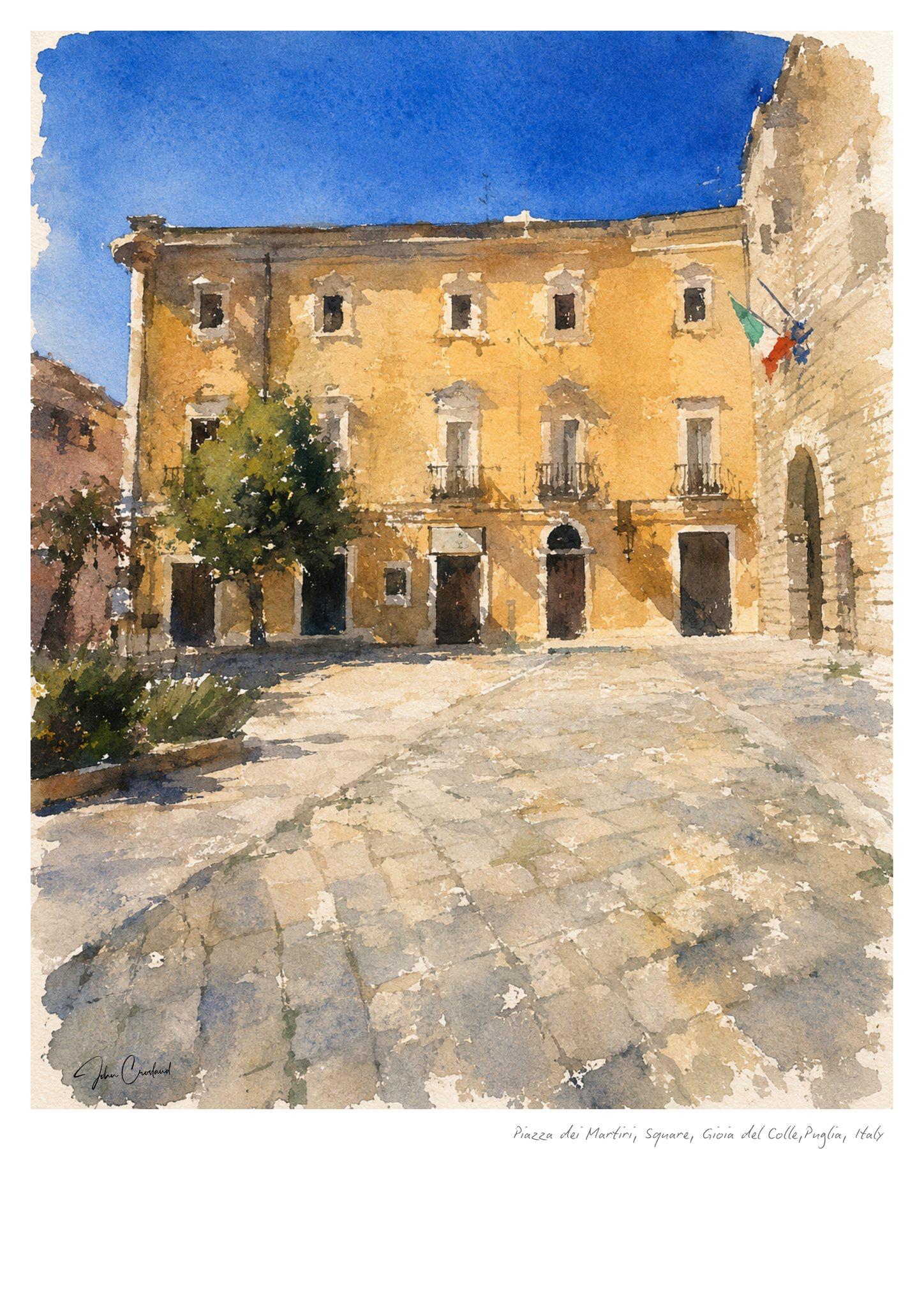
A giclée print is a high-quality inkjet reproduction of an original artwork. The term describes the printing process, not a separate kind of painting or a guarantee of quality. The result still depends on the source image, inks, paper, colour control and care taken in production.
What does giclée mean?
The word comes from the French verb gicler, meaning to spray. In fine-art printing it refers to very small droplets of ink being laid onto paper with close control over colour and tonal detail. It is usually pronounced zhee-clay.
There is no single certificate that makes a print giclée. A useful description should therefore name the paper and explain how the reproduction is made, rather than relying on the word alone.
Why the process suits watercolour
Watercolour contains subtle transitions that are easy to lose: pale washes, granulation, the warmth of the paper and small shifts between wet and dry edges. A carefully prepared high-resolution image and a good fine-art printing process can retain far more of those nuances than an ordinary poster print.
It is not meant to imitate raised paint or pretend to be the original sheet. A good reproduction preserves the visual character of the painting, including its colour relationships, paper edge, signature and handwritten notes where these form part of the work.
The importance of fine-art paper
Paper changes the way an image feels. A naturally textured, matte fine-art stock reduces glare and complements the softness of watercolour. It also gives pale areas and open paper a physical presence that glossy or very smooth stocks do not provide in quite the same way.
The Watercolour Atlas collection uses Editions Etching Cotton Rag 315 gsm paper, selected for detailed fine-art reproduction and a surface sympathetic to watercolour.
Giclée print versus original painting
An original is the unique sheet touched by the artist. A fine-art print is a faithful reproduction made from that work. Both can be beautiful, but they are different things and should be described honestly.
Prints make a painting accessible in several sizes and allow a favourite place to live in more than one home. The original carries its own physical marks and history; the print carries the image and atmosphere.
What to look for when buying
Look for a clear description of the paper, actual artwork dimensions, presentation choices and how delivery is handled. The seller should show the artwork itself clearly rather than relying only on room mock-ups.
It also helps to know who created the original. The paintings here come from my own travels and are reproduced with the signature and written location visible where they appear on the original sheet.
Caring for a fine-art print
Frame the print behind glazing and avoid prolonged direct sunlight, damp rooms and contact with the printed surface. If you order an unframed work, handle it with clean, dry hands and keep it flat until framing. Straightforward care makes a real difference over time.