
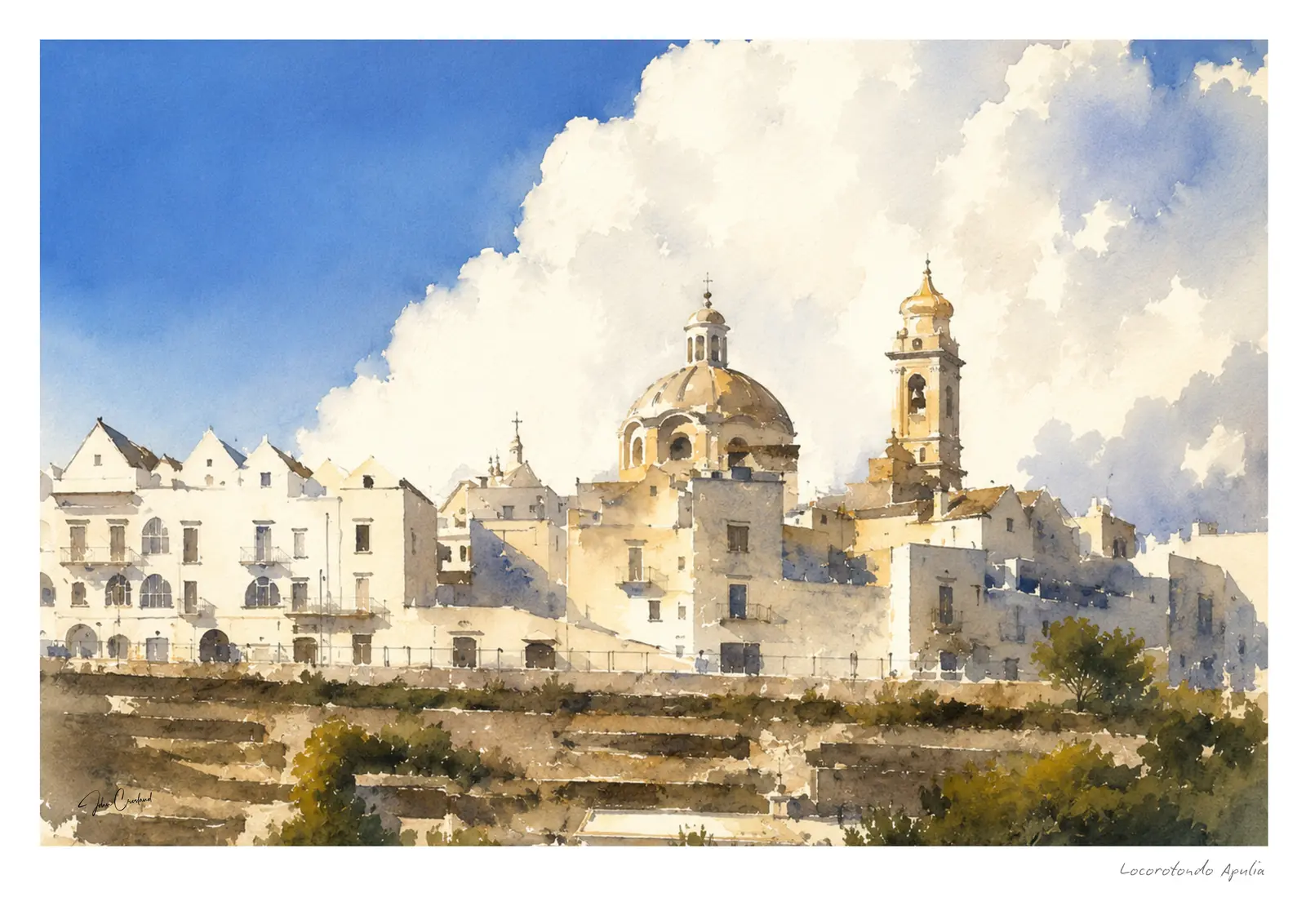
A photograph is where many of my paintings begin, but it is not where they end. The camera gathers more information than a painting needs. My job is to decide which part of that information carries the memory of the place.
Photographing what catches my attention
I am not always looking for a perfect photograph. I may record the direction of the light, the relationship between two buildings or a colour combination that lasts only a moment.
Several ordinary photographs can be more useful than one polished image. Together they hold different pieces of the experience: scale, detail, weather and the route by which I arrived at the view.
Editing before painting
The first decisions are usually about removal. Cars, signs, crowds and awkward fragments may disappear if they interrupt the main idea. Buildings can move slightly and a foreground may be simplified.
This is not about making a place prettier. It is about making the composition say clearly what made me stop in the first place.
Building the painting in washes
I begin with the largest connected shapes and the lightest colour. Sky, distant landscape and sunlit walls establish the atmosphere before smaller architectural marks arrive.
The darker accents come later and in fewer places than the photograph suggests. They guide the eye, create depth and prevent the softer passages from becoming vague.
Keeping accidents and evidence
Watercolour has its own intelligence. Pigment blooms, edges run and granulation settles into the paper. Some marks need correcting, but many contain more life than anything I could draw deliberately.
The irregular paper edge, signature and handwritten location remain visible in the finished reproduction because they are part of that evidence: a painting made in response to a particular journey.
Preparing the work as a fine-art print
The completed painting is digitised at high resolution and carefully prepared so pale washes, paper texture and darker marks remain balanced. The aim is fidelity to the finished sheet, not digital sharpening or artificial saturation.
It is then reproduced individually on archival fine-art paper. The result is clearly a print rather than the unique original, but it carries the composition, colour and atmosphere into a form that can live in another home.